Monday, March 13, 2017

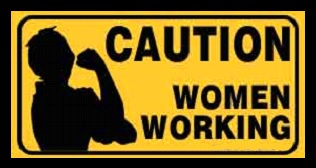
CELEBRATING BRAVE, BOLD & BADASS TEAMSTER WOMEN!


BRAVE, BOLD & BADASS
TEAMSTER WOMEN AT WORK!
              
Throughout our rich history, Teamster women have been engaged and active in their local
unions and communities. Teamster women have fought, and continue to fight, for social and economic justice. During the month of March our women’s committee celebrates their brave, bold & badass contributions that made a difference for women, working families & our union.

A very brief look back...

1900:  By this year every state had passed legislation granting married women the right to keep their own wages and to own property in their own name.

1917:  Going back to it's earliest days, the Teamsters union was the first to secure a gender blind & color blind contract.

1918:  Teamster women show their Teamster power by playing a crucial role during WWI. With the great flu epidemic, Teamster women found themselves doing much more than keeping the home fires burning. Under Tobin’s leadership, women truck drivers transported medicine and supplies to hospitals and rural areas. These women would complete a day’s work, then pick up supplies to deliver to farm families. At each stop they would help with chores and get the family settled before moving on to the next stop.


1919:  “Equal Pay For All” the Teamsters adopted this national slogan in 1919, and pushed for
wage equality.

1920:  The Nineteenth Amendment to the Constitution is ratified, ensuring the right of women to vote.

Congress established the U.S. Department of Labor Women’s Bureau, the only federal agency mandated to represent the needs of wage‐earning women and to promote the passage of legislation to protect working women


1929:  A large number of Teamster women were employed by the laundry industry before World War II. Women members iron clothes at a large laundry company.


1934:  A Women's Auxiliary group consisting of female supporters and the wives of strikers was set up to conduct solidarity work from the union headquarters, such as organize daily demonstrations at city hall, beef up picket lines, run a food commissary and help operate a small hospital for strikers injured on the picket lines and their families. Some of the women even took part in street fighting when workers clashed with police.


1935:  National Labor Relations Act ("NLRA") passed to protect the rights of employees and employers, to encourage collective bargaining, and to curtail certain private sector labor and management practices, which can harm the general welfare of workers, businesses and the U.S. economy

The Social Security Act passed to provide for the general welfare by establishing a system of Federal old-age benefits, and by enabling the several States to make more adequate provision for aged persons, blind persons, dependent and crippled children, maternal and child welfare, public health, and the administration of their unemployment compensation laws; to establish a Social Security Board; to raise revenue; and for other purposes.

1938:  The Fair Labor Standards Act (FLSA), introduced the forty-hour work week, established a national minimum wage for men and women, guaranteed "time-and-a-half" for overtime in certain jobs, and prohibited most employment of minors in "oppressive child labor."

1939-1945: WWII, Teamster women did their part for the war effort too. Women took on many jobs previously held only by men and proved they could hold their own in any work setting. They did every job given them and did them well. Teamster women also served in the women's branches of the military at posts in the United States and overseas.


1945: Teamster women Taxi drivers relax during a break from calls.


1952: In food processing, a National Conference of Fruit, Vegetable and Produce Industries was formed to cover employees in canneries and the new frozen food packing companies.


1955: A Teamster woman demonstrates agility and balance as she harvests mushrooms grown in an abandoned mine.


1950's-1960's:  As the civil rights movement grew the Teamsters became very involved. The union provided money and supplies to many civil rights groups, including the more than 700 families living in "Freedom Village," who faced retribution for registering to vote in 1960.

The Teamsters had a good working relationship with the Rev. Dr. Martin Luther King Jr., with representatives on civil rights boards and committees. And, union members and leaders were active participants in the movement at a time when such actions were considered risky, if not down right dangerous for any organization.  Here in 1968—Clara Day, Business Agent and Community Services Director for Local 743 in Chicago became one of the most prominent women in the union. Day greets Civil Rights leader Ralph Abernathy.


Clara Day joined Local 743 in 1955 after successfully helping to organizing more than 3,000 Montgomery Ward employees. Shortly thereafter, she was brought onto the staff of Local 743 to represent the same workers she had helped bring to the union.  In 1976 she was elected to the Local 743 Executive Board and served as Trustee and Recording Secretary for more than 20 years. Day’s proudest achievements included serving as a founding member of the Coalition of Labor Union Women (CLUW) in 1974 and leading a delegation of union members in the historic March on Washington in the company of Dr. Martin Luther King Jr. in 1963. She was very active in the battle to pass the Equal Rights Amendment for women and was named as a spokesperson for women’s issues and other topics related to social justice.She was a founding member of the Teamsters National Black Caucus in 1976.

1962:  More than 15,000 women come to Washington D.C. between 1962 and 1968 to lobby for labor-related issues through the DRIVE groups. Politicians like LBJ consider them to be the best political action group around.  The women were well informed and not shy about holding Senators and Congressmen accountable for their campaign promises.
Especially daunting for the politicians were the well-publicized "Scoring Banquets" held in Washington, where D.R.I.V.E. delegates would get up and rate politicians' voting records--often with the spotlighted Senator or Congressman seated at the table.
Senator Hubert Humphrey said he had never seen a more effective political action program than the Teamster women's motorcades.


1963:  The Equal Pay Act is passed promising equitable wages for the same work, regardless of the race, color, religion, national origin or sex of the worker.

1964:  Title VII of the Civil Rights Act passes prohibiting sex discrimination in employment.  The Equal Employment Opportunity Commission is created.

1965:  Viola Liuzzo, wife of a Teamster business agent, murdered by the Ku Klux Klan for her role in the civil rights movement.  Joining the movements carpool system, she gave rides to civil rights marchers in and around Selma.  On an isolated road outside of Selma, while giving a ride to Leroy Moton, a 19 year old black man, Liuzzo was ambushed and shot to death.


1965: Mrs. Ted Owens of Local 291 looks out from behind the wheel of her 15 ton dump truck. She learned to balance work and family in a unique way.


1968:  President Lyndon B. Johnson signs an executive order prohibiting sex discrimination by government contractors and requiring affirmative action plans for hiring women.

1968: Teamsters organize Pan Am workers at JFK airport. Pan Am and Braniff were major organizing campaigns in the 1960s.


1970:  The Occupational Safety and Health Act (OSHAct) was passed to prevent workers from being killed or otherwise harmed at work. The law requires employers to provide their employees with working conditions that are free of known dangers. The OSH Act created the Occupational Safety and Health Administration (OSHA), which sets and enforces protective workplace safety and health standards. 

1973: San Diego Zoo Wild Animal Park employees, all Teamsters, tend their charges. Teamsters cover occupations from A to Z Airlines to Zoo Keepers.


1974:  The Supreme Court rules it is illegal to force pregnant women to take maternity leave on the assumption they are incapable of working in their physical condition.

1975:   The United States Supreme Court in the case of NLRB v. J. Weingarten, Inc. 420 U.S. 251 upheld a National Labor Relations Board (NLRB) decision that employees have a right to union representation at investigatory interviews. These rights have become known as the Weingarten Rights.  During an investigatory interview, the Supreme Court ruled that the following rules apply:
Rule 1: The employee must make a clear request for union representation before or during the interview. The employee cannot be punished for making this request.
Rule 2: After the employee makes the request, the employer must choose from among three options:  grant the request and delay questioning until the union representative arrives and (prior to the interview continuing) the representative has a chance to consult privately with the employee;  deny the request and end the interview immediately; or give the employee a clear choice between having the interview without representation, or ending the interview. Rule 3: If the employer denies the request for union representation, and continues to ask questions, it commits an unfair labor practice and the employee has a right to refuse to answer. The employer may not discipline the employee for such a refusal.

1975-1980's:  Regina V. Polk fought diligently for workers’ rights, working as a labor organizer and business agent for the Teamsters in the late 1970's and early 1980's, defying stereotypes and empowering women in a male-dominated workforce.  In 1976, she introduced a resolution on behalf of the Teamster Women's Council to the 21st Constitutional Convention to "launch an intensive organizing campaign directed at those areas of the labor force in which women are concentrated" the resolution went on to point out that although increasing membership was one goal another was promoting "greater participation of women members at every level of the IBT."   The resolution was adopted.  By 1980, Polk was featured in Time magazine and The New York Times, and her reputation grew as a “brazen, unapologetic warrior with a talent for handling grievances, most notably for employees at Blue Cross/Blue Shield, the University of Chicago Hospital, Chicago State University, and Governors State University.  In 1983, the 33-year-old Polk was set to travel on a fundraising mission in Carbondale, IL, and would attend a meeting to help dislocated workers gain better access to job training. Just after 9 p.m., Polk, seven passengers, and three crew members were killed when their Air Illinois aircraft crashed.


1978:  The Pregnancy Discrimination Act bans employment discrimination against pregnant women. 

1980s: Maria Brandon of Local 786 in Elmhurst, Illinois stands by the heavy duty equipment she works with every day.


1980's:  A growing number of Teamster women in every field including law enforcement, medical technologies and parcel delivery.


1986:  The U.S. Supreme Court held that a work environment can be declared hostile or abusive because of discrimination based on sex, an important tool in sexual harassment cases.

1991-2005:  In what many believe was to become the longest strike in U.S. history, 600 Teamster-represented workers walk out at the Diamond Walnut processing plant in Stockton, Calif., after the company refused to restore a 30-percent pay cut they had earlier taken to help out the company. The two sides ultimately agreed to a new contract after 14 years in 2005. 


1993:  The Family and Medical Leave Act (FMLA) passed into law requiring covered employers to provide employees job-protected and unpaid leave for qualified medical and family reasons.

2009: The Lily Ledbetter Fair Pay Restoration Act allows victims, usually women, of pay discrimination to file a complaint with the government against their employer within 180 days of their last paycheck.

2017: Teamster women from local 638 join the largest women's march in history to advocate legislation and policies regarding human rights and other issues, including women's rights, immigration reform, healthcare reform, the natural environment, LGBTQ rights, racial equality, freedom of religion,and workers' rights.  We are also looking forward to celebrating our women's committee 10 year milestone.


Teamster women have made important and distinctive contributions to our union and sharing their stories and examples of leadership help us to realize that we too can take an active part in our union.  How will you be brave?  Have you tried being bold?  What does it take for a badass Teamster woman to persist?

                                 
When I remember the ladies, that's where I find, what is in her heart is also in mine.  


RESOURCES
https://teamster.org/womens-history-month/news
http://www.apwu.org/labor-history-articles/regina-v-polk-breaking-mold
https://youtu.be/O-Ohd3QfGUw
https://www.usnews.com/news/the-report/articles/2017-01-20/timeline-the-womens-rights-movement-in-the-us
http://www.afscme.org/for-members/womens-leadership-training/leadership-tools/body/Women_in_Labor_History_Timeline.pdf
https://www.osha.gov/Publications/osha3021.pdf

Wednesday, March 8, 2017

# BE BOLD FOR BREAD & ROSES!

# BE BOLD FOR BREAD & ROSES!

On March 8, 1857 several hundred courageous & bold women laboring in New York City's sweatshops took to the streets, striking against low wages, dangerous conditions, and the 12-hour workday in textile and garment factories. This strike became the basis for International Women’s Day.

Women and girls between the ages of 13 and 25, typically worked 12 to 14 hours, 7 days a week at a sewing machine in a factory without central heating, electricity, or ventilation.  They got paid approximately $3.00 a week of which $1.25 had to be kept out to pay for room and board.  There were no protections against the spread of fire. Because of these working conditions, women often suffered from serious workplace injuries, chronic migraines and fatigue, swollen feet and ankles, and contagious illnesses that spread quickly and easily in the cramped factories.   Noticing that the women were less ‘energetic’ if they were allowed to eat before working, the factory foreman, changed the factory opening time to 5am, this is what sparked the strike.

This strike -- the first to be documented by some claims, as a strike by women exclusively for the purpose of women's rights -- was broken up by police, who attacked the protesters, but this didn't break their spirit. Two years later they formed a labor union. The United States Congress will not enact the National Labor Relations Act, which guarantees workers the right to bargain collectively through representatives of their own choosing, until 1935.

Twelve years after the strike in May of 1869, Susan B. Anthony and Elizabeth Cady Stanton form the National Woman Suffrage Association with the primary goal of achieving voting rights for women by means of a Congressional amendment to the Constitution.

On March 8, 1908, fifty years after the strike, more than 15,000 women in New York marched under banners demanding equal pay, the right to vote, child care during the work day, and better working conditions, adopting the slogan "Bread and Roses": bread for economic stability, and roses for a better way of life.

In 1910, Clara Zetkin, at an international conference held by socialist organizations from around the world in Copenhagen, proposed that March 8 be declared International Women's Day in recognition of the strikes of 1857 and 1908. Over 100 women from 17 countries greeted the idea with unanimous approval.  Each year more and more women and men celebrate International Women's Day and commit themselves to fighting for equality.

Today The World Economic Forum predicts the gender gap may take until 2186 to close.

The next Equal Pay Day is Tuesday, April 4, 2017. This date symbolizes how far into the year women must work to earn what men earned in the previous year.

International Women’s Day is calling for everyone around the world to join together to speed up this process. This is why 2017 is about #Be Bold For Change.

"Join the union, girls, and together say, Equal Pay for Equal Work!"     ~Susan B. Anthony

       Like our sisters before us,  it's our time to 
                              #BE BOLD!


RESOURCES:
http://historynewsnetwork.org/article/640
www.unionist.com
http://www.yesmagazine.org/people-power/where-did-international-women-s-day-come-from
https://www.internationalwomensday.com/
https://statusofwomendata.org/


Friday, January 27, 2017

    
    Five Facts From Your Teamster Sisters


We joined our sisters and brothers for the Women's March On Washington Jan. 23, 2017 in support of women's rights, immigration reform, healthcare reform, protection of the natural environment, LGBTQ rights, racial justice, freedom of religion and workers' rights.   It was the largest one-day protest in U.S. history, at least half a million people in Washington, and some estimates put worldwide participation at 4.8 million.

Our group marched alongside 100,000 in St. Paul, MN. It was inspiring, energizing and empowering. I smiled and held up my sign that said "Educate, Agitate, Organize!"  I chanted with others, "This is what democracy looks like!"  and I knew that I was not alone. 

"Our sisters around the world are united!" Jamey Brimer, Teamster 38yrs, who is thinking about getting off the sidelines and running for congress.

"Protesting is our civil right in the USA.  I marched because they're changing laws as we speak that affect women."    Judy Dawson , Teamster  27yrs.  

Maggie Tuff, Teamster 36yrs and now retired said, "There were a lot of reasons to march, but without strong unions and good safe jobs, we have nothing! "

1.  Equal Pay for Equal Work is in our union contracts.

In 1869, Susan B. Anthony,  social reformer and women's rights activist, said
"Join the union, girls, and together say Equal Pay for Equal Work." Today union women make more money than our non-union sisters.  Research shows that for union women ages 16 and older, who work full-time, it amounts to an extra $231 per week.


2.  We collectively bargain for benefits.

Collective bargaining (also called contract negotiations) is the heart and soul of the labor movement. It is when workers band together to negotiate workplace matters with their employer. The end result is a collective bargaining agreement or contract that simply spells out all of the terms both parties agree to from pay rates and benefits, to a grievance procedure, time off and more.

Union women are more likely to have health insurance benefits covered by the employer or union. 


3.Together we raise our voices to make improved working conditions.

Labor protections enjoyed by the entire U.S. workforce can be attributed in large part to unions, for example the National Labor Relations Act, Social Security Act, Occupational Safety and Health Act and Family Medical Leave Act.  We provide information about workers' rights and encourage workers to exercise their rights without fear of retribution.  We believe that everyone should be treated with dignity & respect.

4.  We were there.

Teamster women have made innumerable contributions to lead and fight for women’s rights, civil rights, workers rights and social progress.  Here's a brief look back:

-1906 Teamsters speak out against other unions where separate locals were formed for black members. 
-1918  During the great flu pandemic Teamster women transported medicines and made deliveries to families. The union and the country would not have made it without them.
-1917  Equal pay for equal work should become a constant.
-1919 “Equal Pay For All” the Teamsters adopted this national slogan and pushed for
wage equality.
-1934 Teamsters strike in Minneapolis led to labor reform acts and the establishment of the National Labor Relations Board.
-1934 Teamsters oppose Jim Crow in the south
-1950-1960 The union provided money and supplies to many civil rights groups, including the more than 700 families living in "Freedom Village," who faced retribution for registering to vote.
-1968 more than 15,000 Teamster women go to Washington D.C. to lobby for labor-related issues.  Not shy about holding elected representatives accountable they organized "scoring banquets" and would publicly rate voting records, often times with the representative right there.


5.  We think you're worth it!  Join us!

We love waking up every day knowing we are Teamsters!  
We know that organizing and solidarity work.  We also know what a difference joining a union makes and wanted to share that with you.   

Teamsters like to say that we represent workers from A to Z -- airline pilots to zookeepers.

Joining a labor union is one of the most effective vehicles for workers to join the middle class.  Are you ready?

Here's some answers to frequently asked questions  


If you are interested in organizing your workplace contact the Teamsters Organizing Office 

Jeff Farmer, Director
Phone (202) 624-8718
Fax (202) 624-6832


RESOURCES:

https://en.wikipedia.org/wiki/2017_Women's_March
http://statusofwomendata.org/app/uploads/2015/08/R409UnionAdvantage.pdf
http://www.aflcio.org/content/download/90691/2393381/version/3/file/1677_UnionDifference_16.pdf
https://tcf.org/content/facts/state-unions-u-s-economy/
https://teamster.org/about/teamster-history
https://teamster.org/about/teamster-history/ww2
https://teamster.org/news/2016/03/teamsterscelebratewomenshistorymonth
https://teamster.org/news/2015/03/teamsterscelebratewomenshistorymonth


Sunday, March 20, 2016

CELEBRATING WOMEN'S HISTORY MONTH 2016


WE CAN DO IT!


March is Women's History Month.  It's almost impossible today to imagine that, just a couple of generations ago, a woman who worked fulltime was more the exception than the norm.  Minnesota has the 2nd highest female workforce in the nation.  According to the Forbes list of "The Best Cities for Working Women in 2015," Minneapolis is 2nd and Saint Paul is 4th.  We must be doing something right!  So, how did we get here?  Local 638's women's committee believes that working women and Teamster women had a lot to do with it!  Women work every day.  No matter where they live, their economic activity is vital to the economy and society, their communities, their families and their personal autonomy and growth as human beings.  Here's how we have been celebrating!

.


After attending a Teamster Women's conference in 2009, Peggy Vanhese wanted to share what she had learned and inspire others to get involved in our union, especially women, because the "union difference" for women isn't just about dollars and sense, when women succeed American families succeed. Building on Peggy's creative poster project, that inspired Teamster women to make and share women's history in our local, later displayed at the Teamster Women's conference in 2012, this year our women's committee focused on sharing working women and Teamster women's stories.  We also wanted to highlight that "A Woman's Place is in Her Union!"
 
 
We started by sharing and displaying Teamster women's stories on our lockers at work.


To honor, celebrate and have some fun, we asked our sisters to come to work dressed like "Rosie the Riveters" the last work day of every week in March.


We are sharing the stories of extraordinary Teamsters Clara Day and Regina V. Polk as they fought for workers rights, civil rights and women's rights.  Did you know more than 15,000 Teamster women traveled to Washington, D.C. between 1962 and 1968?  The women who joined the DRIVE motorcades traveled by bus to meet Senators and Congressmen to discuss labor related issues.  They hosted the well publicized "Scoring Banquets" where they would get up and rate politicians' voting records, often with the spotlighted Senator or Congressman seated at the table.  Minnesota Senator Hubert Humphrey said he had never seen a more effective political action program than the Teamster women's motorcades.


We made a "Rosie the Riveter" photo back drop and took some fun pictures!


With our brothers and sisters, we are sharing stories of our working mothers and grandmothers, it's exciting to find out that some were "Rosie's" themselves!  We are sharing a bit of history with those who were not taught in school much about women's history or the progress, contributions and sacrifices that our labor movement has made in social progress. 
 
The AFL-CIO conducted a national survey of working women last year and the results are in! Today, more and more women are the primary breadwinners and financial decision-makers in their households.  Women overall still earn 79 cents for every dollar a man earns. For women of color, the gap is even larger, African-American (60 cents) and Latino (55 cents).  A report last year said that American men will likely earn more than women until 2058.   For families to thrive working women must have equal pay and equal say today! 

The truth is, in most cases, in order to be paid the same as men, women need to have a union agreement. Unions have taken major steps forward when it comes to furthering women’s rights in the workplace and Teamster contracts have historically lead the way when it comes to gender equality.  Why is a woman's place in her union?  For women and families it's common sense!  As Susan B. Anthony said so many years ago,

                  "Join the union, girls, and together
                     say Equal Pay for Equal Work!"


Sunday, February 14, 2016

MEET LIFESAVER FRANCES PERKINS!

 
MEET LIFESAVER FRANCES PERKINS!
 
While the Teamster Women's Committee of local 638, our Executive Board, the IBT and members of CHSP committees ("Lifesavers!") are busy organizing for the upcoming SAFETY SEMINAR on Feb. 20, 2016 (find out how you can attend below) , we thought we would share with you how women have pioneered and paved the road for better & safer working conditions.

How did one woman, against all odds, make so many lives better? What do you do if you're in the depths of a Great Depression? What happened during her encounter with IBT General President James R. Hoffa in 1963? Why didn't we learn about her in history class?

Fannie Coralie Perkins was born in Boston Massachusetts,1880. She spent her childhood summers with her grandmother on the farm in Newcastle. Frances later explained. "I am extraordinarily the product of my grandmother," whose wisdom guided her throughout her life. She attended Mount Holyoke College at a time when it was uncommon for women to do so. "Perk," nicknamed by her classmates, majored in physics, with minors in chemistry and biology. In her final semester, she took a course in American economic history which required her to visit the mills along the Connecticut River and observe working conditions that would set her on the path to making so many lives better.

"From the time I was in college I was horrified at the work that many women and children had to do in factories. There were absolutely no effective laws that regulated the number of hours they were permitted to work. There were no provisions which guarded their health nor adequately looked after their compensation in case of injury. Those things seemed very wrong. I was young and was inspired with the idea of reforming, or at least doing what I could, to help change those abuses." she recalled later.

After graduation, she took a teaching job in Illinois. She volunteered her free time and vacations to work at Chicago Commons and Hull House working with the poor and unemployed. Determined and convinced she said "I had to do something about unnecessary hazards to life, unnecessary poverty. It was sort of up to me."

As general secretary of the Philadelphia Research and Protective Association, in 1907, she worked to keep young immigrant girls and black women from the south from prostitution. She investigated childhood malnutrition among school children in New York’s Hell’s Kitchen, and enrolled as a Master’s Degree candidate in sociology and economics at Columbia University. Her research project, entitled "A Study of Malnutrition in 107 Children from Public School 51," became her Master’s thesis.

In 1910 she became Executive Secretary of the New York City Consumers League, working directly with Florence Kelley, focusing on the need for sanitary regulations for bakeries, fire protection for factories, and legislation to limit the working hours for women and children in factories to 54 hours per week. In the halls and committee rooms of the state capitol she learned the skills to be an effective lobbyist for labor and social reforms.

On March 25, 1911, she witnessed the tragedy of the Triangle Shirtwaist Factory fire in which young women jumped from the eighth and ninth floors of the building to their deaths on the street below. She later proclaimed, it was "the day the New Deal was born." Recognized as an expert in the field of worker health and safety and recommended by Theodore Roosevelt, she is hired as executive secretary of the citizen's Committee on Safety that was established to recommend practices to prevent a further tragedy in the city’s factories. Their work resulted in the most comprehensive set of laws governing workplace health and safety in the nation.

Reflecting on her years as lobbyist, investigator and researcher, Frances Perkins later said, "The extent to which this legislation in New York marked a change in American political attitudes and policies toward social responsibility can scarcely be overrated. It was, I am convinced, a turning point."

She continued to work with labor and allies to build on the legislative accomplishments in New York. She was the first woman to be appointed to an administrative position in New York state government and, with an annual salary of $8000, the highest paid woman ever to hold public office in the United States. Newly elected governor Franklin D. Roosevelt asked Frances to become the state’s Industrial Commissioner, with oversight responsibilities for the entire labor department. Soon, she became the most prominent state labor official in the nation, as she and Roosevelt searched for new ways to deal with rising unemployment. Increasingly she became focused on devising a program of unemployment insurance. With her encouragement, Roosevelt became the first public official in the country to commit himself to unemployment insurance.

In 1932, in the depths of the Great Depression, Roosevelt successfully defeated incumbent Republican president Herbert Hoover to win the presidency of the United Staes. In 1933, President-elect Roosevelt asked Frances Perkins to serve in his cabinet as Secretary of Labor, she outlined for him a set of policy priorities she would pursue: a 40-hour work week; a minimum wage; unemployment compensation; worker’s compensation; abolition of child labor; direct federal aid to the states for unemployment relief; Social Security; a revitalized federal employment service; and universal health insurance. She made it clear to Roosevelt that his agreement with these priorities was a condition of her joining his cabinet. Roosevelt said he endorsed them all, and Frances Perkins became the first woman in the nation to serve in a Presidential cabinet.

 
"I promise to use what brains I have to meet problems with intelligence and courage."

 
In 1934, Roosevelt appointed Frances Perkins to head a Committee on Economic Security, where she forged the blueprint of legislation finally enacted as the Social Security Act. Signed into law by the President on August 14, 1935, the Act included a system of old age pensions, unemployment compensation, workers’ compensation and aid to the needy and disabled.

In 1938, Congress enacted the Fair Labor Standards Act, also crafted with the support of Perkins, establishing a minimum wage and maximum work hours and banning child labor.

As secretary of labor during the 1930s and early 1940s, Perkins played a crucial role in the outcome of the dramatic labor uprisings that marked the era. She consistently supported the rights of workers to organize unions of their own choosing and to pressure employers through economic action. In one famous incident captured in a widely circulated newspaper photo, an indomitable Perkins strides toward the U.S. post office in Homestead with thousands of steelworkers training behind her. Denied a meeting hall by the mayor and steel executives, Perkins found an alternative site where she could inform the workers directly of their collective bargaining rights. It was also the unflappable Perkins who advised President Roosevelt to ignore the pleadings of state and local officials for federal troops to quell the 1934 San Francisco General Strike. The successful resolution of that strike as well as countless others during her tenure as labor secretary laid the foundation for the rebirth of American labor.

Before leaving the Department of Labor in June of 1945, Frances Perkins stood in the department’s auditorium, and while a full orchestra played, she shook the hands, and personally thanked every one, of the department’s 1800 employees. The months that followed were busy, as she began writing The Roosevelt I Knew, a best-selling biography of FDR published in 1946, and serving as head of the American delegation to the International Labor Organization in Paris.

The following year, President Truman appointed her to the United States Civil Service Commission, a position she held until 1953. She then began a new career of teaching, writing and public lectures, ultimately serving until her death as a lecturer at Cornell University’s new School of Industrial Relations.

In early 1963, she met IBT General President James R. Hoffa after a lecture he gave at Cornell at a Telluride reception. With an outstretched hand he said, "I always wanted to meet you Madame Perkins to tell you how good you done in ending unemployment." From underneath her tri-corn hat she smilingly rejected his compliment. "Come now, Mr. Hoffa, you know as well as I do that the war and not the New Deal overcame unemployment."

Frances Perkins suffered a stroke and died at Midtown Hospital in New York City on May 14, 1965, at the age of 85.


"There is always a large horizon... There is much to be done...
I am not going to be doing it! It is up to you to contribute some small part to a program of human betterment for all time."


JOIN THE LIFESAVERS!


Teamsters Local 638 will be hosting a free full day workshop to better equip members to setting safety standards, knowing your rights and how working together we make work better.


Date:  Saturday February 20, 2016
Time: 8:00 A.M. Please arrive early for registration
Place: Teamster Building 3rd Floor
            3001 University Ave SE
            Minneapolis MN 55414

Please contact Teamster office at 612-379-1533 in order that we may properly prepare for all attendees. Lunch is on us!


RESOURCES:

https://en.wikipedia.org/wiki/Frances_Perkins

http://francesperkinscenter.org/?page_id=574

http://www.aflcio.org/About/Our-History/Key-People-in-Labor-History/Frances-Perkins-1880-1965

http://www.msnbc.com/the-last-word/why-frances-perkins-so-important-us-history

THE FRANCES PERKINS I KNEW MEETING WITH HOFFA PG 7
http://blog.francesperkinscenter.org/wp-content/uploads/2014/04/The-Frances-Perkins-I-Knew-by-Christopher-Breiseth.pdf


Saturday, January 30, 2016

YOU HAVE THE RIGHT TO A SAFE WORKPLACE!


          THE RIGHT TO A SAFE WORKPLACE!


Under federal law, you are entitled to a safe workplace. Your employer must provide a workplace free of known health and safety hazards. If you have concerns, you have the right to speak up about them without fear of retaliation. You also have the right to: Training, safe machines, safety gear,  to be protected from toxic chemicals, request an inspection, report injury or illness, see copies of workplace injury and illness log, review records of work-related injuries and illnesses and get copies of test results done to find hazards in the workplace.


As union women we know that many have fought and died in the struggle to achieve better working conditions for us all. With the passing of the Occupational Safety and Health Act in 1970, these rights become the minimum standard for working people in the US.

While the Teamster Women's Committee of local 638, our Executive Board, the IBT and members of CHSP committees ("Lifesavers!") are busy organizing for the upcoming SAFETY SEMINAR on Feb. 20, 2016 (find out how you can attend below) , we thought we would share with you how women have pioneered and paved the road for better & safer working conditions.

How did one woman make a difference in the lives of working Americans? Why did she crawl over open coal pits, ride down mine shafts in open cages, and climb up ladders? How did she connect the dots for workers getting poisoned at work? She was named Time Woman of the Year in 1956 so why in the 1960's, when she was in her 90's, was the FBI still keeping tabs on her?


Meet Lifesaver Alice Hamilton! (1869-1970)


Alice Hamilton was born in Fort Wayne, Indiana in 1869 to a prominent family. In 1893, she graduated from medical school at the University of Michigan. In 1897, she started teaching at the Women’s Medical School of Northwestern University and she moved into Hull House.

While at Hull House, Hamilton operated a well-baby clinic for neighborhood residents. Under the direction of the State of Illinois and later the Federal Bureau of Labor Statistics, she began to investigate occupational illnesses (also called industrial medicine) and soon became a pioneer in the field. Her most well-know investigations were her studies of carbon monoxide poisoning in steelworkers, mercury poisoning in hatters, and a debilitating hand condition developed by workers using jackhammers.

It was common in many dangerous trades at the turn of the twentieth century, the risk of taking an industrial job. There were no laws to protect workers in factories, no OSHA, no workers’ compensation. Dr. Alice Hamilton wanted to take on the problem of industrial poisoning. When Alice Hamilton began her work in the new field of industrial toxicology, few worried about chemical hazards at work. Many victims were recent immigrants afraid to complain. Most did not know the risks. "The poor must take dangerous jobs, or have no jobs at all," she wrote.

Part of a generation of progressive women who took active roles in changing society for the better she got involved in the labor movement, working with the Factory Girls. With Florence Kelley in the 1920’s she worked with the Consumers’ League to help the "Radium Girls" who were dying from their work with radium-laden paint. These women asked for the League’s help when state health departments refused to do anything. They fought for compensation and safety regulations

Her first article on occupational disease was published in 1908. Dr. Hamilton was appointed in 1910 by the governor to a commission to investigate occupational diseases in Illinois. When she began her work with a small group of physicians and student assistants, she called it a journey of exploration.


She went to watch workers sand-papering the lead painted ceilings of Pullman cars. In smelters on the south side laborers shoveled white lead from the drying pans and breathed the deadly dust. To prove these toxins killed employees, she visited 300 workplaces, interviewed workers, and went to their homes to speak to them or to surviving relatives. She researched death records. She found Cook County Hospital filled with victims of industrial poisoning. The American Federation of Labor helped pressure for safety and compensation laws.

American medical authorities had never taken this type of health problem seriously before. Employers too were ignorant and indifferent. Dr. Hamilton recalled the manager of a lead plant who was shocked when she suggested that he was responsible when workers got lead poisoning there. He thought of himself as an enlightened, caring employer.

In 1911 Illinois passed a first attempt at compensation for industrial diseases caused by poisonous gases, fumes, and dust. It required safer workplaces and monthly medical exams for lead and arsenic workers. The law was overturned by the Supreme Court and not replaced until 1936. The National Association of Manufacturers opposed safety legislation as they opposed shorter hours and ending child labor.

During World War I she investigated munitions plants and found them in constant danger of exploding. She discussed this with then Assistant Secretary of the Navy, Franklin Roosevelt. Munitions workers’ health became a matter of national concern.

Dr. Hamilton became a committed New Dealer, serving as consultant to the United States Division of Labor Standards. Her work contributed to reforms in industrial hygiene laws like the Fair Labor Standards Act. Dr. Hamilton said she was most pleased that laborers were no longer submissive or ignorant about workplace hazards. They became willing to demand better conditions for themselves. She felt this attitude was critical in maintaining safety gains.


"I began to see the working world through the workers’ eyes."

Dr. Alice Hamilton is considered a lifesaver and the mother of Occupational Health and Safety.


JOIN THE LIFESAVERS!


Teamsters Local 638 will be hosting a free full day workshop to better equip members to setting safety standards, knowing your rights and how working together we make work better.

 
     Date: Saturday February 20, 2016


     Time: 8:00 A.M. Please arrive early for registration


     Place: Teamster Building 3rd Floor

                3001 University Ave SE

                Minneapolis MN 55414


Please contact Teamster office at 612-379-1533 in order that we may properly prepare for all attendees.  Lunch is on us!


Resources:

 
https://www.osha.gov/workers/index.html

https://en.wikipedia.org/wiki/Alice_Hamilton

https://teamster.org/about/review-safety-and-health-fact-sheet-archive